


Article: Why Exfoliation Advice Was Never Written for Us

Why Exfoliation Advice Was Never Written for Us
If you have ever followed exfoliation advice to the letter, used the product the influencer recommended, applied it the number of times the brand suggested, waited the weeks they promised and ended up with skin that was darker, angrier, or more uneven than when you started, this is for you.
You did not do anything wrong. The advice was not written for you.
That is not an opinion. It is a fact that the skincare industry has been slow to confront. And it is something we think about every day as a science-led skincare brand in Ghana that understands, firsthand, what melanin-rich skin needs.
The Standard Exfoliation Conversation Leaves Us Out
Open almost any global skincare guide on exfoliation, and you will find the same framework: cleanse, exfoliate two to three times a week, moisturise, SPF. The acid most frequently recommended? Glycolic. The concentration? As high as your skin can tolerate. The skin type shown in the before-and-after? Rarely ours.
This is not accidental. The foundational research on AHA exfoliation was largely conducted on lighter Fitzpatrick skin types. The products that emerged from that research were designed around how those skin types respond to acids, which is meaningfully different from how melanin-rich skin responds.
The result is a global skincare conversation that has been, at its core, built around a skin type that is not the majority in Africa, the diaspora, or the world. For those of us living in Ghana and across the African continent, this gap is not theoretical. It shows up in our beauty shops. It shows up as the dark marks left by products meant to brighten.
What Actually Goes Wrong
Here is the biology that most exfoliation guides skip.
Melanin-rich skin across Fitzpatrick types III to VI contains no more melanocytes than lighter skin. Every human being has roughly the same number of these melanin-producing cells. What differs is the size, distribution, and reactivity of melanosomes: the tiny organelles within those cells that produce and distribute melanin throughout the surrounding skin tissue.
In darker skin, melanosomes are larger, more numerous per keratinocyte, and, critically, more sensitised to inflammatory signals.
That last point is everything.
When you apply an exfoliant that is too strong, too frequent, or at a pH too low for your skin's tolerance, the skin mounts an inflammatory response. Blood rushes to the area. Immune cells are deployed. Cytokines, chemical messengers, flood the local tissue.
In lighter skin, this often shows up as temporary redness that fades within a day. In melanin-rich skin, those same cytokine signals reach melanocytes, which respond by producing more melanin. Not less. More.
The dark marks that appear in the areas you were trying to treat? That is post-inflammatory hyperpigmentation. It is your skin’s response to inflammation, using the only protective tool it has. And it can persist for six to eighteen months, often far longer than the original concern you were treating.
This is the cycle that millions of people with melanin-rich skin are trapped in. They exfoliate to clear hyperpigmentation. The wrong exfoliant creates new inflammation. New pigmentation forms. They exfoliate again.
No one told them this would happen. Because the advice was not written for them.
The Ghana Climate Makes This More Complex
Living in Ghana and more broadly, across the African climate, adds another layer of complexity that international skincare advice almost never accounts for.
The heat and humidity of the Ghanaian climate mean the skin is already under a different kind of daily environmental load. UV exposure is intense year-round. Sweat and sebum production are higher. The skin barrier is working harder, every day, simply to manage transepidermal water loss in a hot, humid environment.
This matters for exfoliation for two reasons.
First, a skin barrier already under environmental stress is more susceptible to disruption by aggressive acids. The margin for error is narrower. What might be tolerable in a cooler, lower-UV environment can tip into barrier damage in the Ghanaian climate.
Second, post-exfoliation photosensitivity, the increased vulnerability to UV damage that all AHAs create, is significantly more consequential when the UV index is high year-round. In the UK or Europe, a missed SPF on a cloudy morning is a small risk. In Accra, in the harmattan, in any Ghanaian season, it is a direct route to UV-triggered hyperpigmentation.
International skincare advice does not factor this in. It is written for a different climate, a different UV context, and a different skin type. Skincare in Ghana, formulated and advised by people who actually live here, must approach this differently.
The Specific Failures of Generic Acid Advice for Our Skin
Let us be concrete about where mainstream exfoliation advice goes wrong for melanin-rich skin in the African climate.
- Glycolic acid
The default recommendation. It is the smallest AHA molecule, approximately 76 Daltons. Its small size means it penetrates the skin rapidly and deeply. In controlled clinical settings, on the skin types it was primarily tested on, this produces fast results. On melanin-rich skin, particularly in a high-UV, high-heat environment like Ghana, rapid, deep penetration frequently triggers the inflammatory cascade that leads directly to post-inflammatory hyperpigmentation. Countless people across Ghana and the African continent have experienced this. The advice that caused it is still being given.
- Concentration without context
Start with 5%, build to 10% is advice that exists entirely without reference to skin type, local climate, barrier condition, or UV exposure. For someone in Accra using a 10% glycolic acid product twice a week, unprotected from daily harmattan sun, this is a prescription for new pigmentation, not clearer skin.
- No acknowledgement of the PIH risk.
The most significant consequence of exfoliation for melanin-rich skin is rarely mentioned in guides recommending it. Post-inflammatory hyperpigmentation is not a side effect to manage. For many of our community members, it is the primary skin concern. Any exfoliation advice that does not address it directly is incomplete and potentially harmful.
- SPF advice is treated as optional.
In lower-UV climates, SPF after exfoliation is recommended. In the Ghanaian climate, it is a necessity. The difference is not subtle.
What Thoughtful Exfoliation for Our Skin Actually Looks Like
The answer is not to avoid exfoliation. The science is clear: when done correctly, exfoliation is one of the most effective tools for improving skin texture, managing congestion, and gradually addressing hyperpigmentation.
The answer is to exfoliate intelligently. And what intelligence looks like, specifically for melanin-rich skin in the African climate, is this:
- Choosing an acid with a larger molecular size
Larger molecules penetrate the skin more slowly and more evenly. This controlled penetration gives the skin time to process the acid activity without mounting the inflammatory response that triggers melanogenesis. Clinical research has shown that certain AHAs produce genuine improvement in texture and hyperpigmentation across Fitzpatrick types I through VI — without causing new pigmentation. The key variable is the acid’s molecular profile, not just its concentration.
- Prioritising the barrier, not just the surface
Exfoliation in a hot, humid climate needs to be accompanied by genuine barrier support ingredients that repair the skin's lipid barrier and restore moisture. Stripping the surface without rebuilding the underlying layers turns exfoliation into a problem rather than a solution, particularly in the Ghanaian climate, where the barrier is already under environmental stress.
- Treating inflammation as part of the formula
For melanin-rich skin, anti-inflammatory support is not an optional add-on. It is a required component of any responsible exfoliation approach. The inflammatory response to acid activity needs to be managed at the point of treatment, not hoped away.
- Wearing SPF the morning after, every morning, without exception
This is especially true in Ghana's skincare market. There is no season in our climate where UV protection after exfoliation is unnecessary. There is no cloudy enough day. SPF is not the last step in a skincare routine. It is the step that determines whether everything before it was worthwhile.
This Is a Conversation That Has Been a Long Time Coming
Skincare in Ghana and across Africa has long operated in the shadow of an industry that was not built with us in mind. Products developed elsewhere, tested on other skin types, sold through marketing that does not reflect our faces, our climate, or our biology.
That is changing. Slowly, but it is changing.
Tomorrow: a deep dive into the biology of exfoliation itself. What actually happens inside your skin at a cellular level when an acid is applied, and why understanding the mechanism changes everything about how you use these products.
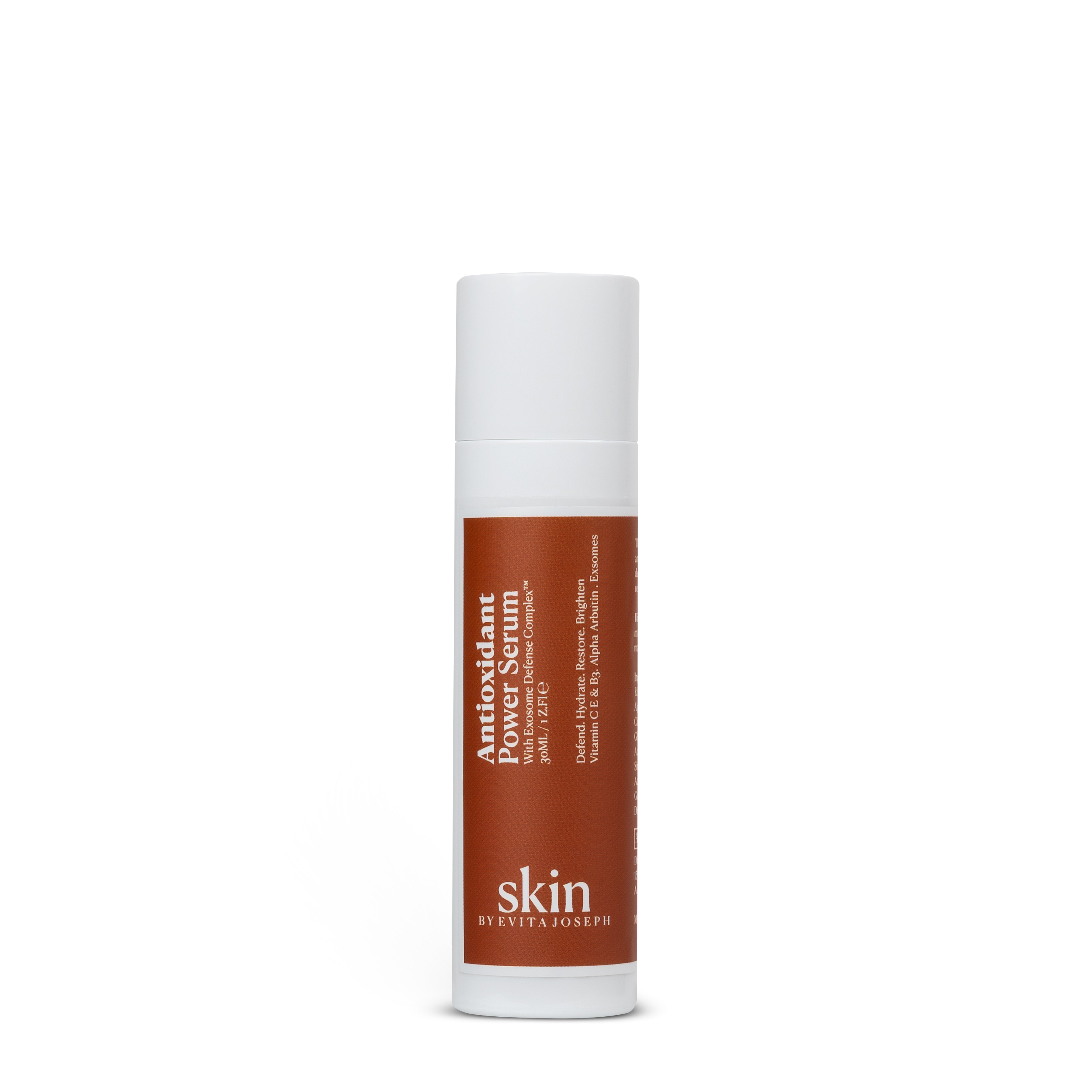
*Skin by Evita Joseph is a science-led skincare brand in Ghana, formulating for melanin-rich skin across the African continent and the global diaspora.*


Leave a comment
This site is protected by hCaptcha and the hCaptcha Privacy Policy and Terms of Service apply.