



Why Your Skin Looks Dull (And Why It's Probably Not Dirt)
You catch your reflection in a shop window, or in that unforgiving lift mirror, and your skin just looks… tired. Flat. A little grey. Not bad, exactly, just not lit from within the way you'd like. And the frustrating part is that you're doing things. You cleanse. You exfoliate. You've bought the products. So why does your skin still look dull, no matter what you try?
Here's the reassuring truth most of us are never told: dull skin is very rarely dirty skin. And the harder you scrub at it, the duller it can actually become. Let's slow down and look at what's really happening because once you understand it, the fix is gentler and simpler than you'd think.
What "dull" skin actually is
We tend to talk about glow as if it's something the skin either has or doesn't. In reality, radiance is mostly about light. When the surface of your skin is smooth, comfortable and well-hydrated, light hits it and bounces back evenly and that even reflection is what we read as "glow." When the surface is rough, dry, or slightly disrupted, light scatters rather than reflects. Same skin, same person, but it looks flatter and greyer.
So dullness usually isn't a sign that something dirty is sitting on your face. More often, it's a sign that the surface has lost a bit of its smoothness and moisture. That's a comforting reframe, because it points you away from scrubbing harder and toward something far kinder.
Seven quiet signs you might be over-exfoliating
None of these is alarming on its own, but if a few feel familiar, your skin may simply be overworked rather than under-cleaned:
- It feels tight or squeaky after cleansing — clean shouldn't feel stripped.
- The glow you do get keeps fading fast.
- Products that never used to sting suddenly do.
- You're scrubbing more but seeing less smoothness.
- There's a redness or warmth that lingers.
- Makeup catches or looks patchy in the same areas.
- You've quietly decided "nothing works on my skin."
If that last one landed, take a breath. It's very often not that nothing works, it's that the skin has been asked to cope with too much, too often.
Gentle renewal does more than harsh renewal
Your skin already knows how to renew itself. Fresh surface cells are always working their way up; that's simply how skin behaves. The job of a good routine isn't to force that process with aggression; it's to gently support it and then get out of the way.
That's the whole case for calm exfoliation. A gentle, leave-on step, used a few nights a week rather than nightly, helps smooth the surface and support a more even-looking tone over time — without the tightness, stinging, or lingering redness that harsher approaches can bring. Comfort here isn't a luxury; it's part of the strategy. Skin that stays comfortable is skin that keeps looking its best.
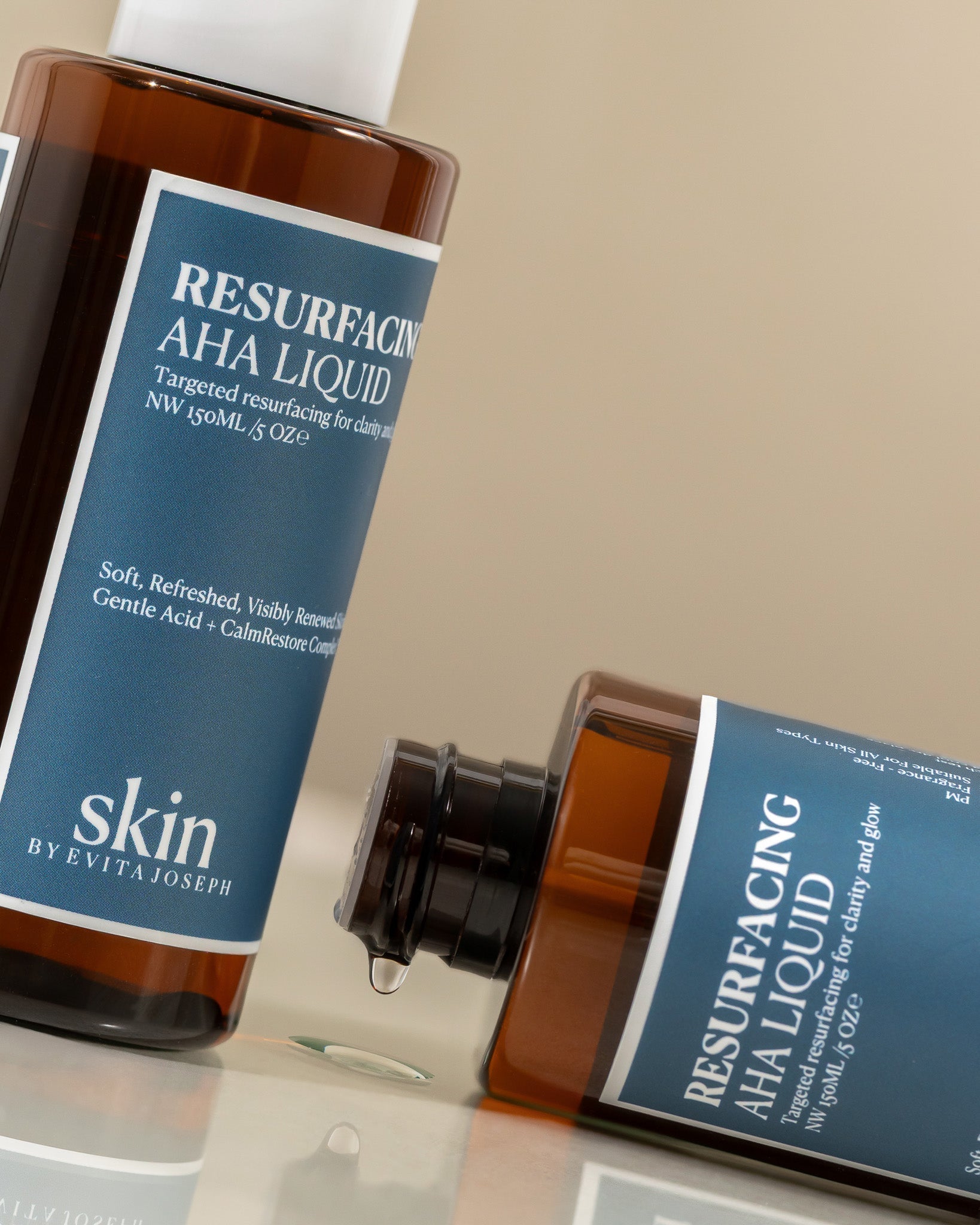
This is exactly the thinking behind our Resurfacing AHA Liquid. It pairs a Gentle Acid Complex™ (12% Mandelic, Lactic and Fruit Acids) with a soothing CalmRestore Complex™ (3.1% Centella Asiatica, Panthenol, Allantoin and Rose Water), so the resurfacing side is balanced by ingredients that help keep skin calm and hydrated as it works. Resurfacing without the aggression, in other words.
"Are acids safe for melanin-rich skin?"
This is one of the most common and most understandable worries we hear. Many people with melanin-rich skin have been told, directly or by implication, that acids are risky for them, usually due to concerns about dark marks or uneven skin tone.
Here's the calm version. The concern isn't really acids versus melanin-rich skin. It comes down to approach: the gentleness of the acid, how often it's used, whether the barrier is being supported alongside it, and — this part matters enormously — whether the skin is protected from the sun afterwards. Gentler acids like Mandelic are well-suited to melanin-rich skin, and starting slowly (rather than every night) gives skin room to stay comfortable. Our Resurfacing AHA Liquid was formulated with melanin-rich skin and first-time acid users in mind for exactly this reason.
What turns a gentle acid into a genuinely melanin-considerate routine, though, is the step people most often skip.
The daily-SPF habit (the half that makes it all worthwhile)
If you take one thing from this whole article, let it be this: wear sunscreen every single day. Not only on the days you exfoliate. Not only when it looks sunny.
Daily sun exposure is one of the biggest reasons dark marks and uneven tone linger, and that's especially relevant for melanin-rich skin. When you're supporting your skin's renewal, you're helping bring fresher skin to the surface, and leaving that unprotected in daylight quietly undoes the work. The exfoliating step and the SPF step aren't separate decisions; they're two halves of the same habit. The gentle acid does its part at night. The SPF is what makes that part worth doing.
How to start, gently
If you're ready to swap harsh for gentle, keep it genuinely simple:
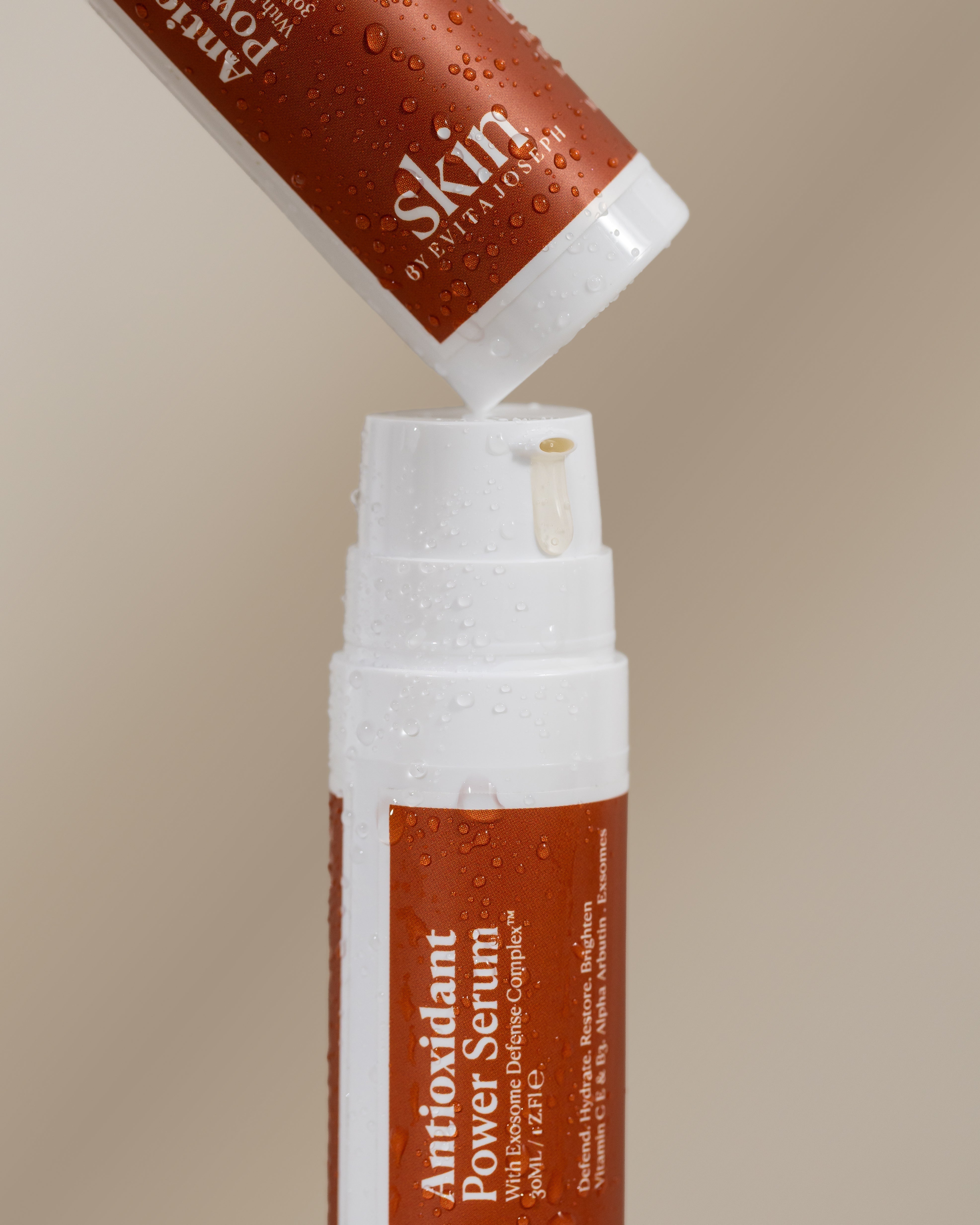
Use your resurfacing step in the evening, after cleansing, two to three nights a week to begin with. Follow with a hydrating serum and your moisturiser. Then, every morning, finish with SPF every day, without exception.
And give it time. Skin renews on its own schedule, over weeks rather than nights, so real change in smoothness and tone shows up gradually.
The takeaway
Your skin was probably never dull. It was more likely just exhausted, worn down by good intentions and a little too much friction. The way back to glow isn't more scrubbing or another product on the pile. It's smoother, calmer support for the renewal your skin already knows how to achieve, protected by a daily sunscreen habit.
Be gentle with your skin. Stay consistent. Protect it in the mornings. That's the quiet, unglamorous secret, and it works.




Leave a comment
This site is protected by hCaptcha and the hCaptcha Privacy Policy and Terms of Service apply.